SHARE
SHAREFrom ballistic missiles and drone swarms to electronic warfare and hypersonic weapons, nations require integrated and adaptive defence ecosystems
Air superiority and territorial defence are undergoing a fundamental transformation. The rapid proliferation of advanced missiles, autonomous systems, long-range precision weapons, electronic warfare capabilities, and low-cost aerial threats has reshaped the strategic calculus for nations worldwide. Modern conflicts increasingly demonstrate that threats can emerge simultaneously across multiple domains, at varying altitudes, and at unprecedented operational tempo, challenging traditional approaches to national integrated air and missile defence.
As a result, national air and missile defence is no longer viewed solely as a military capability, but as a core element of national resilience and strategic continuity. Governments must now protect not only military forces and strategic assets, but also critical infrastructure, civilian populations, economic activity, and the continuity of daily life against increasingly coordinated and persistent aerial and ballistic threats.
This reality has become particularly evident in Europe, where the war in Ukraine, regional instability, and the growing proliferation of long-range missiles and drones have accelerated defence modernization efforts. Similar dynamics are emerging across the Middle East, Asia-Pacific, and other regions facing evolving missile and UAV threats.
These Multi-Domain threats range from ballistic and cruise missiles to UAV swarms, electronic warfare, cyberattacks, and emerging hypersonic weapons. Some require strategic, long-range interception within compressed timelines, while others demand scalable responses to mass attacks involving large numbers of low-cost aerial targets.
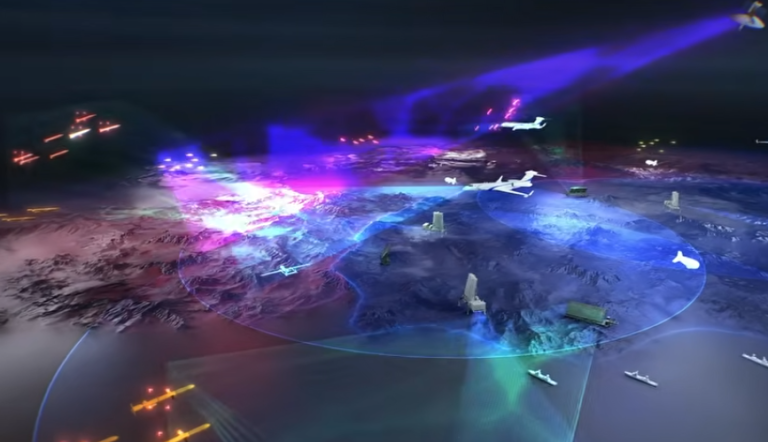
In this environment, national air and missile defence can no longer operate as separate disciplines. Modern Integrated Air and Missile Defence (IAMD) requires a connected, multi-layered architecture that senses, understands, decides, and acts in real time. Sensors, command-and-control systems, effectors, and electronic warfare capabilities must operate within a single trusted operational framework, integrating existing and future systems into a unified national defence ecosystem.
For decades, IAI has developed and delivered the building blocks of Israel’s national air and missile defence architecture while supporting defence programs worldwide. One of IAI’s unique advantages is ownership of the complete operational value chain – spanning sensors and radars, interceptors, airborne systems, electronic warfare, command-and-control frameworks, and overall systems integration in all domains (Space, Air, Land and Naval). Combined with extensive operational experience and
combat-proven performance, this enables continuous adaptation to real-world operational feedback.
Building Situational Awareness
The foundation of any national defence architecture is situational awareness. Nations must detect and track threats across multiple domains, full spectrum, altitudes, and operational environments, including long-range ballistic missiles, low-signature cruise missiles, conventional aircraft, and UAVs operating near the ground or within urban terrain.
Meeting this challenge requires a combination of active and passive sensing capabilities deployed across space, air, land, and sea. Advanced radar systems provide long-range surveillance, precision tracking, and target classification over wide areas, while passive detection systems enhance resilience by identifying airborne threats without emitting signals, thereby supporting survivability in contested electromagnetic environments.
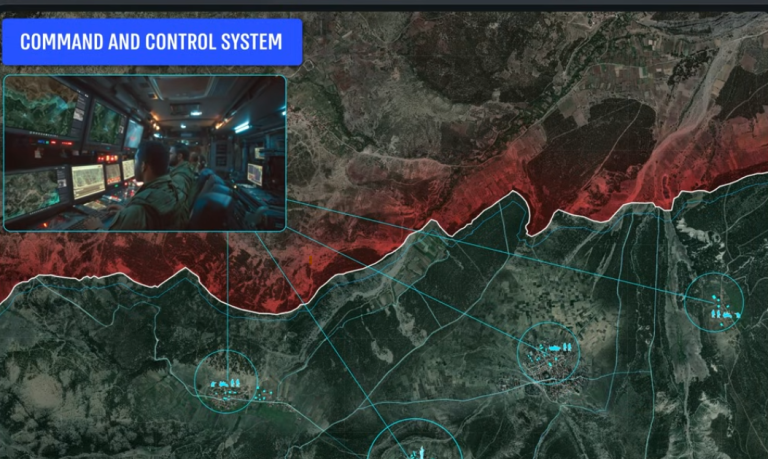
However, sensors alone are insufficient. The speed and density of modern aerial threats require immediate data fusion and coordinated decision-making. National-level command-and-control systems therefore play a critical role in transforming large volumes of sensor data into a single, trusted operational air picture. By integrating sensors, interception systems, airborne assets, and intelligence sources, integrated command frameworks enable operators to prioritize threats, assess risks, allocate resources, and coordinate engagements in real time.
Addressing Multiple Threat Layers
This integration is especially important when addressing very different threat vectors simultaneously. Hypersonic missile defence require early warning, long-range tracking, and effectors capable of operating within compressed engagement timelines. Drone swarms defence, on the other hand, require scalable, cost-effective responses that can handle large numbers of small targets without depleting strategic interceptor inventories.
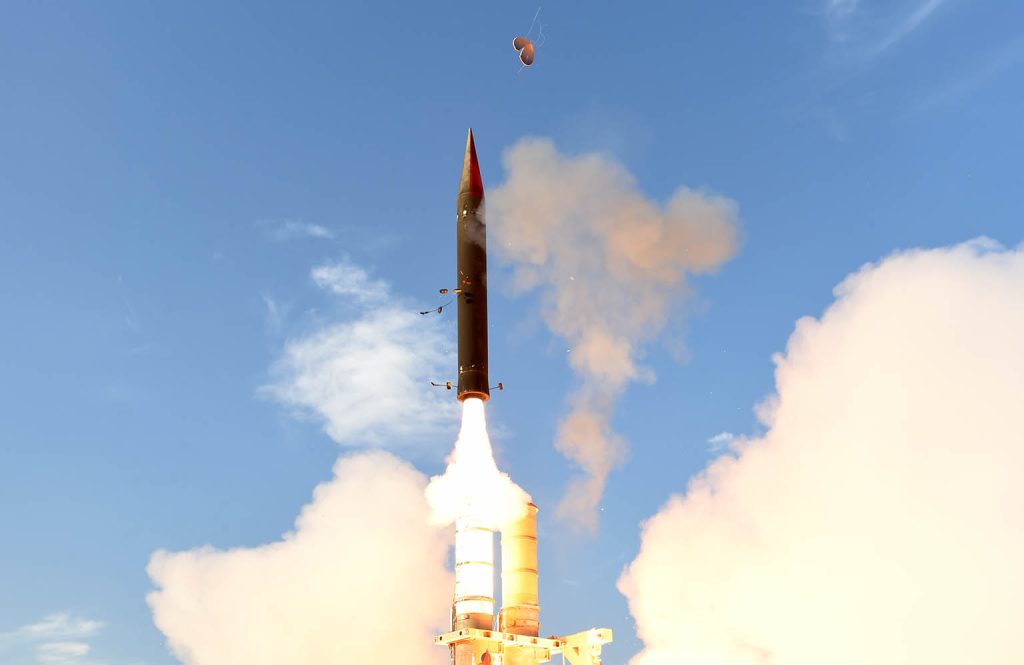
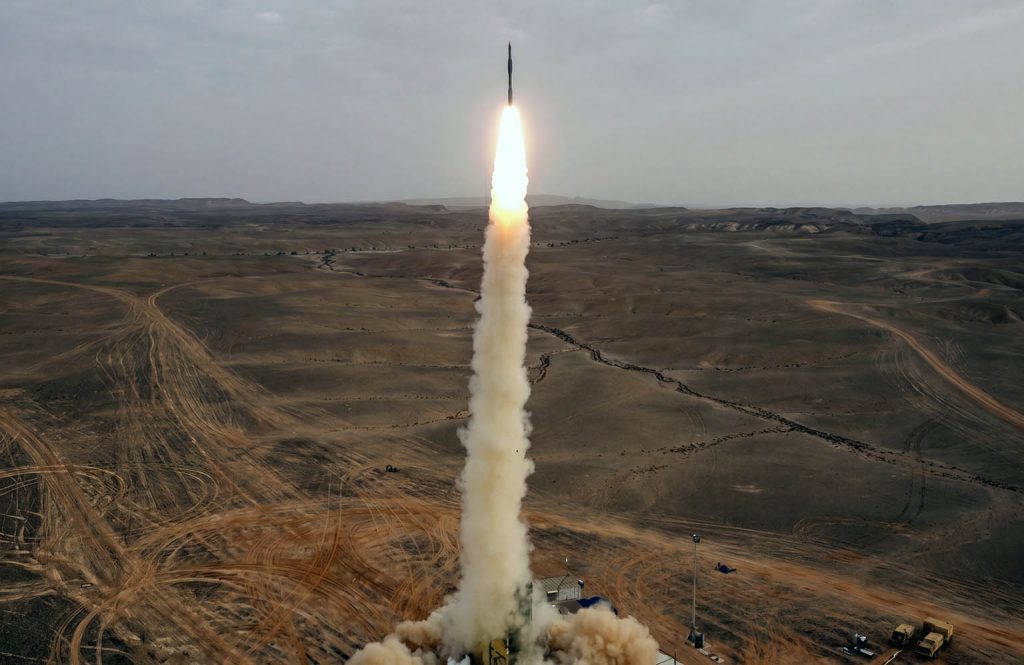
Modern air and missile defence is inherently layered. Strategic defence layers protect against ballistic missile threats both inside and outside the atmosphere. Medium- and short-range layers address aircraft, cruise missiles, rockets, and tactical threats. Additional layers counter One-Way Attack (OWA) drones and loitering munitions, which increasingly threaten military and civilian infrastructure.
Electronic warfare capabilities are increasingly important within this architecture. In highly contested operational environments, the ability to detect, disrupt, deceive, or deny hostile systems through soft-kill measures can significantly improve survivability and operational effectiveness, particularly against autonomous systems and coordinated saturation attacks. In many scenarios, soft-kill measures can neutralize or degrade threats before hard-kill interceptors are deployed, enabling more efficient use of defensive resources.
Airborne surveillance and early-warning assets further strengthen national defence by expanding detection coverage, improving target tracking, and supporting operational continuity across large geographic areas.
Shaping the Next Generation of National Defence
The future of Integrated Air and Missile Defence will be defined not by isolated platforms, but by the ability to integrate sensing, decision-making, interception, electronic warfare, and operational coordination into a unified and adaptive defence ecosystem. As aerial threats continue to evolve in scale, speed, complexity, and accessibility, nations will increasingly require architectures capable of operating across all domains while maintaining resilience under sustained attack.
Building such architectures demands more than advanced interceptors or high-performance sensors alone. It requires operational integration, interoperability, rapid adaptability, and the ability to continuously evolve based on real-world operational experience.
Drawing on decades of operational expertise and combat-proven systems, IAI continues to support national air and missile defence programs through the integration of advanced sensing technologies, layered interception capabilities, airborne surveillance, electronic warfare, and unified command-and-control frameworks. This integrated approach enables nations to strengthen sovereignty, protect critical assets, and preserve operational continuity in an increasingly contested security environment.
Consult with an IAI Expert
Have a question or need more details?
Our specialists are here to help you find the right solution