SHARE
SHAREKey Takeaways
- ICBMs create a complex defense challenge across launch, space flight, and re-entry.
- Modern threats are harder to manage due to MIRVs, decoys, and advanced guidance systems.
- Effective defense requires early detection, persistent tracking, and fast decision-making.
- Advanced radar, C2, and layered interception are central to long-range ballistic missile defense.
- The key challenge is integration: multiple systems must operate as one coordinated architecture.
Intercontinental Ballistic Missiles (ICBMs) remain a central factor in the evolution of modern strategic threats. Beyond their extended range, these systems operate across multiple domains – from launch into space, through exo-atmospheric flight, to high-velocity re-entry – creating a complex operational challenge that spans technologies and defense layers. These characteristics do not simply reflect performance; they fundamentally reshape the requirements for detection, tracking, and interception.
What Defines an Intercontinental Ballistic Missile?
ICBMs are defined as long-range ballistic systems capable of delivering payloads across continents via trajectories that extend beyond the atmosphere. However, their operational significance goes far beyond this basic definition. The combination of range, altitude, and extreme velocity places unique demands on defense architectures, particularly in terms of early warning, persistent tracking, and time-critical response.
The Growing Complexity of ICBM Threats
The ICBM threat landscape continues to evolve, with increasing emphasis on complexity rather than range alone. One of the most significant developments is the integration of Multiple Independently Targetable Reentry Vehicles (MIRVs). A MIRV configuration enables a single missile to deploy multiple warheads, each capable of engaging a different target. This shifts the defensive challenge from dealing with a single incoming threat to managing multiple simultaneous engagements under severe time constraints.
In addition to MIRVs, advances in guidance systems, maneuverability, and the use of countermeasures – such as decoys designed to mimic real warheads – further complicate the detection and tracking process. As a result, the challenge is no longer limited to identifying a threat, but to interpreting a dynamic and ambiguous operational environment in real time.
Core Challenges in Detecting and Defending Against ICBMs
| Challenge | Operational Meaning | Defense Requirement |
| Extended range | The missile can travel across continents | Early warning and long-range detection |
| Exo-atmospheric flight | The missile travels beyond the atmosphere during part of its trajectory | Space-aware tracking and multi-domain sensing |
| High-velocity re-entry | The response window becomes extremely short | Time-critical decision-making and fast engagement planning |
| MIRVs | One missile can generate multiple targets | Simultaneous tracking, classification, and prioritization |
| Decoys and countermeasures | False targets can mimic real warheads | Advanced discrimination and real-time data processing |
| Multi-layered trajectory | Different phases require different response capabilities | Integrated, layered missile defense architecture |
From Early Warning to Persistent Tracking
Effective response to ICBM threats begins with early detection, but does not end there. Identifying launches in real time and maintaining continuous tracking across domains – from space to atmosphere – requires persistent, high-performance sensing capabilities. This challenge becomes significantly more complex in MIRV scenarios, where multiple objects must be tracked, classified, and prioritized simultaneously.
Advanced radar systems play a central role in establishing an accurate and continuous operational picture. Long-range detection, high-resolution tracking, and real-time data processing are essential for enabling informed decision-making. Capabilities such as those developed within IAI, including IAI-ELTA’s radar technologies, are designed to support early warning and precise tracking within complex and evolving threat environments. Critically, these systems operate as part of broader architectures, enabling integration with additional sensors and command systems.
IAI’s Role in the ICBM Defense Environment
IAI’s connection to the ICBM defense environment lies in its ability to support the broader architecture required to detect, track, assess, and respond to long-range ballistic threats – in professional terms – Sense-Make sense-Decide-Act. Through advanced radar capabilities, our sensor technologies, command-and-control integration, and experience in layered air and missile defense, IAI contributes to the system-level infrastructure needed for modern ballistic missile defense. In this context, the relevance of IAI is not limited to a single platform, but to the integration of sensing, decision-making, and interception capabilities into a coordinated operational framework.
Turning Sensor Data into Defensive Action
Transitioning from detection to interception represents the critical link between data and action. Converting sensor data into timely and accurate engagement decisions requires the integration of command and control (C2), real-time data fusion, and coordinated engagement planning. The complexity increases further when dealing with multiple simultaneous targets generated by MIRVs, where prioritization and resource allocation must occur under strict time constraints.
Interception systems, such as the Arrow missile defense family, represent one layer within a broader defensive framework designed to address long-range ballistic threats. Rather than acting as standalone solutions, such systems are integrated into a multi-layered architecture, where each layer is optimized to address different phases of the threat trajectory. This layered approach provides operational depth and flexibility, particularly in scenarios involving complex threats and multiple warheads.
Why ICBM Defense Requires a System-of-Systems Approach
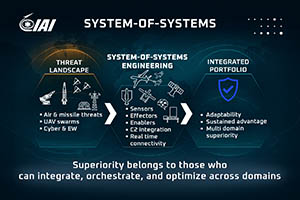
The primary challenge in countering ICBM threats is not purely technological, but systemic. No single system can provide a comprehensive solution. Operational effectiveness depends on the integration of multiple components – sensors, processing systems, command and control, and interception layers – into a unified architecture. This system-of-systems approach enables continuous management of the engagement cycle, from initial detection through to interception.
Modern missile defense increasingly relies on the ability to connect sensing, processing, and response into a continuous operational loop. Detecting earlier, tracking more accurately, and acting faster are all functions of how effectively systems are integrated and how efficiently data is transformed into actionable insight. This shift reflects a broader transition from platform-centric approaches to networked, data-driven operations, where decision speed is as critical as system performance.
Integrated Architecture as the Future of Missile Defense
Ultimately, addressing ICBM threats reflects a wider transformation in defense strategies-from isolated capabilities to integrated architectures, and from individual platform performance to system-level effectiveness. The combination of advanced radar, interception capabilities, and command infrastructure enables defense forces to respond to the speed, scale, and complexity of modern ballistic threats, supporting the development of resilient, multi-layered, and data-driven defense solutions.
What is ICBM?
An ICBM (Intercontinental Ballistic Missile) is a long-range ballistic system capable of delivering payloads across continents via high-altitude trajectories that include space flight and high-speed re-entry.
What is a MIRV?
A MIRV (Multiple Independently Targetable Reentry Vehicle) is a payload configuration that enables a single ballistic missile to deploy multiple warheads, each targeting a different objective.
Why are MIRVs challenging missile defense systems?
MIRVs increase engagement complexity by generating multiple simultaneous threats from a single launch, requiring advanced tracking, discrimination, and prioritization capabilities.
How are ICBMs detected and tracked?
ICBMs are detected using observation satellites, long-range radar and early warning systems that enable persistent tracking across domains, supporting real-time situational awareness and decision-making.
What makes ICBMs difficult to intercept?
Their extreme velocity, high-altitude trajectories, limited response timelines, and the use of decoys or MIRVs significantly increase interception complexity
Consult with an IAI Expert
Have a question or need more details?
Our specialists are here to help you find the right solution