OPAL NG
AI-Enabled Decentralized Battle Management Network

OVERVIEW
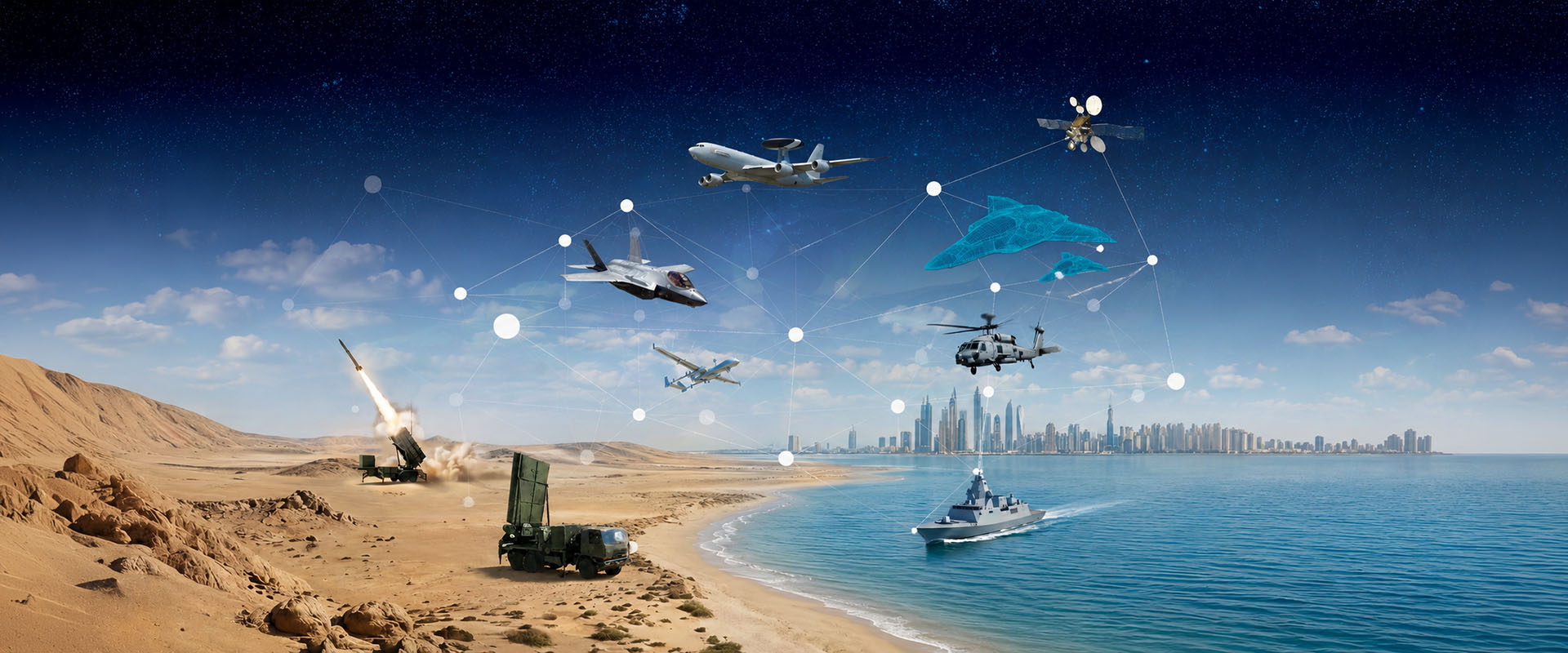
OPAL NG delivers seamless real-time interoperability across air, land and naval forces, connecting legacy and next-generation platforms into a unified operational framework. Building on the proven operational heritage of OPAL, OPAL NG introduces AI-enabled edge processing, enhanced manned-unmanned teaming and resilient multi-domain collaboration for future operational environments. Complementing existing tactical networks such as Link-16, OPAL NG enables distributed forces to operate with a synchronized real-time operational picture across coalition and national assets.
HIGHLIGHTS
- Real-time situational awareness
- Real-time ad-hoc network for high maneuvering combat entities
- Data sharing between entities across multiple domains
- Secure and agile application framework, open architecture
- Seamless integration with C3 systems such as PANORAMA
- Open for integration of user-developed capabilities
Values & Benefits
OPAL ensures complete interoperability among different generations of airborne platforms, extending to naval and land forces. Its open architecture design allows low lifecycle costs, agile integration of new capabilities, and seamless customization and upgrades, dramatically reducing time to market for new applications and features.
Deployed on the F-35, F-15, F-16, Apache AH-64, aerial tankers, mission and AEW aircraft, UAVs, naval corvettes, and ground C2 centers, OPAL has demonstrated its effectiveness in both combat and operational scenarios.
- Ad-hoc, real-time, self-forming, self-healing network
- Robust and jam-resistant, supports various SDRs
- Highly scalable to support hundreds of entities
- Generic infrastructure supporting multiple applications
- Dynamic segmentation enabling mission efficiency & data security
- Collaborative targeting and threat sharing
- Real-time collision avoidance
- Enhanced mission performance & optimized resource utilization
- Comprehensive interoperability among different forces
- Improved survivability and safety
- Minimized development and implementation time & costs
- Effective training via virtual/augmented reality
Technical Details
- Technical Details Benefits
- Ad-hoc, real-time, self-forming, self-healing network Enhanced mission performance & optimized resource utilization
- Robust and jam-resistant, supports variety of SDRs Comprehensive interoperability among different forces
- Highly scalable to support hundreds of entities Improved survivability and safety
- Generic infrastructure which supports multiple applications Minimized development and implementation time & costs
- Dynamic segmentation enabling mission efficiency & data security Effective training via virtual / augmented reality
- Collaborative targeting and threat sharing
- Real-time collision avoidance