SHARE
SHAREHow cross-platform networking turned mixed fleets into a single lethal force
Barak Israel | Product manager | With over 15 years of executive experience spanning defence aviation and enterprise software, Barak leads comprehensive business development for the networking solutions aimed at global defence aviation markets. He leverages a proven track record of managing high-value defence contracts and engaging with CxO-level stakeholders to drive international adoption of state-of-the-art aviation networking capabilities.
The deep-strike operations against hardened military and nuclear infrastructure during the past two years demanded capabilities no single aircraft type could deliver alone: stealth penetration, electronic warfare suppression, heavy precision strike, and persistent surveillance, executed simultaneously across thousands of kilometers of contested airspace. Success required fifth-generation and fourth-generation aircraft operating not in parallel, but as one coordinated force.
The challenge is well known. Fifth-generation fighters carry exceptional sensors and survivability, but their native data links communicate primarily within homogeneous formations. Legacy aircraft bring substantial weapon loads and proven combat systems, yet cannot natively exchange data with newer platforms in real time. Without a bridging layer, these elements fight in silos, with gaps that adversaries can exploit.
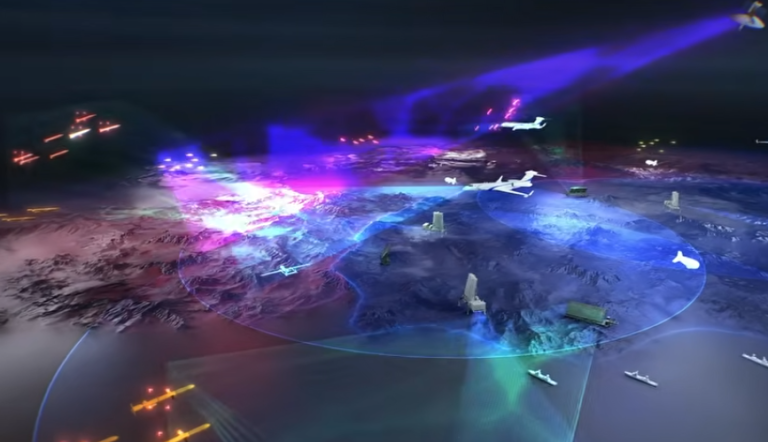
A software-defined airborne mission network closes this gap. Operating as a non-invasive layer above each platform’s avionics, installed without modifying the core avionics block, it connects to the data bus, fuses sensor outputs with network intelligence, and delivers a unified operational picture. A fifth-generation fighter detecting a mobile missile launcher transmits precise coordinates to a fourth-generation strike aircraft in seconds, across an encrypted tactical cloud, with no voice coordination required.

This interoperability extends across domains. Naval combatants and ground command elements share the same fused picture as airborne assets. Dynamic retargeting, real-time threat updates, and automated deconfliction operate continuously.
For air forces operating mixed fleets, cross-generation networking transforms every platform into a force multiplier. Open architecture ensures the system works with any radio, any platform, and any network, scaling with the force rather than constraining it.
Explore more IAI insights
Consult with an IAI Expert
Have a question or need more details?
Our specialists are here to help you find the right solution