In the arsenal of the “Eitam” Artillery Battalion (611) of the 282nd Fire Brigade, you won’t find even a single cannon or a single launcher either – And no, this is not an operational gap. Unlike its artillery counterparts, its entire purpose is target acquisition – in other words, determining the exact location of a specific object in – Or more precisely, identifying threats on their way to our territory. But how do they do it?
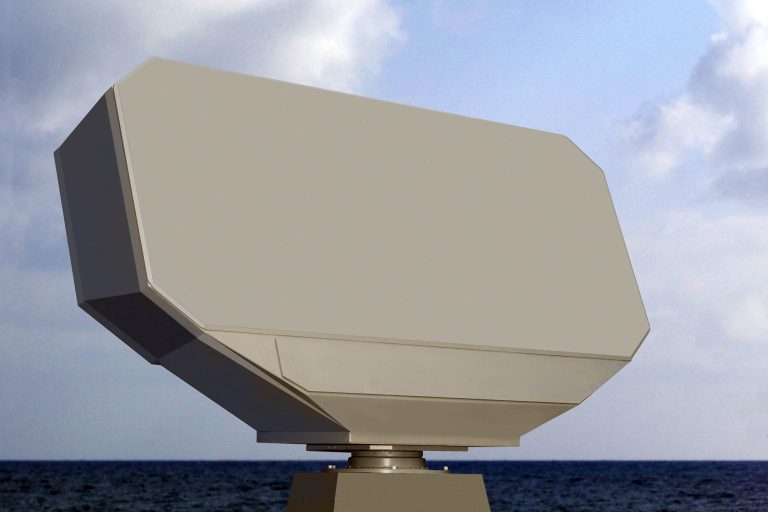
Let’s shatter the illusion: it’s not a miracle, but rather a tool that replaces the barrel – with a radar. A system capable of tracking objects using waves, named “RAZ.” (IAI-ELTA’s MMR) “The initials in Hebrew stand for ‘multi-branch’ because we are deployed all over the country, assisting all divisions, commands, and branches,” explains the battalion commander, Lt. Col. A.
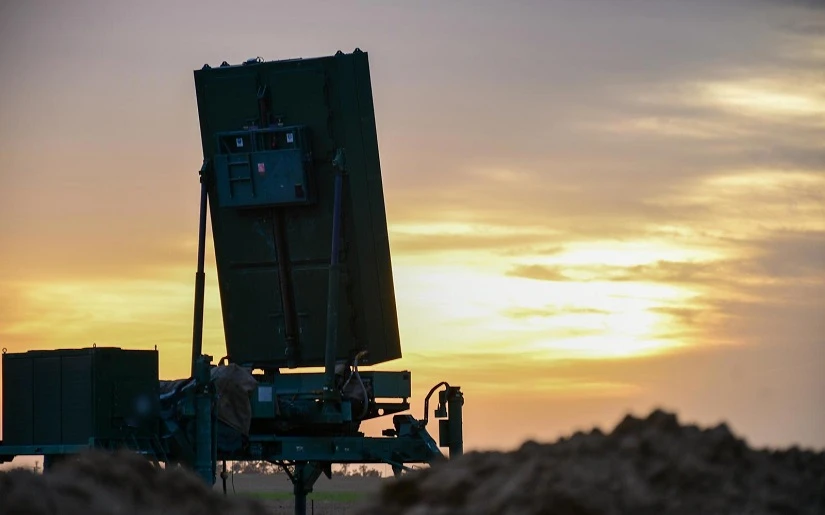
MMR Radar in the Artillery Core (pic: IDF Website)
One battalion – 5 different mission
The battalion has two companies, southern and northern, each responsible for five main missions during operations. “The first is artillery fire adjustment and control – in other words, artillery accuracy,” he begins. “Like in a shooting range, where you calibrate a weapon and check the average impact point, we do the same – only with shells.”
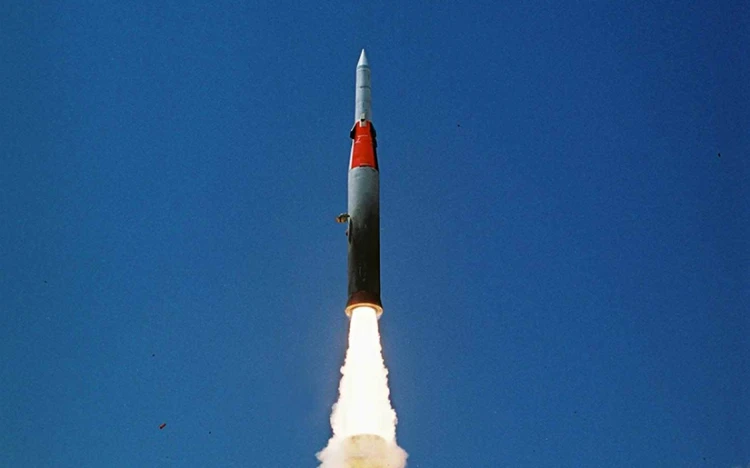
“Our system allows us to see where the shells landed, so the soldiers can adjust their fire to hit the target,” clarifies Lt. Col. A. The second mission is launch detection: “Using radar, we can pinpoint locations from which the enemy fires at us, and we can also identify the type of weaponry they are using.”
This leads to the third mission the Eitam soldiers handle – warning rear posted forces. “After locating the launch site, the RAZ system estimates the point where the rocket or missile might land,” he reveals. “This way we can alert both the Home Front Command and nearby maneuvering forces to take cover.”
Although we’re not done yet, the fourth role of the battalion is operational “closing the loop.” “Since we identify where the launch originates, we provide precise coordinates to the relevant fire mission centers at the command, division, or brigade level. From there, the next step is theirs – we provide them with a target to strike.”
Last but not least, the battalion contributes to the broader mission of air defence. “One of our radar’s capabilities is detecting aerial threats, thereby assisting the Air Force and air control units in various sectors,” notes the commander. During Operation “Rising Lion” (The 12 Days War) this mission became especially critical.
“Our team positioned itself at a location where they detected a swarm of hostile drones heading toward the country,” he recalls. “Quickly, and in coordination with the Air Force, we helped them pinpoint the exact origin of the threat, allowing them to disrupt its activity and prevent infiltration across the border.”
The volatile front
And although we counted only five missions, during the war a sixth – equally important – was added, in a field where the battalion had never operated before: the international legitimacy arena. “Various reports in the media claimed that we had struck a hospital or sensitive areas. Because we track every high-trajectory launch toward Israel – and vice versa – we were able to prove it was actually a failed enemy launch. These findings were used by the military for investigations and legitimacy efforts in the media and public diplomacy arenas.”
At the end of the in-depth overview, in which we learned how Battalion 611 integrates into various systems and sectors – without firing a single shell – the commander reveals one last detail: “We’re heading for an upgrade. In 2026, the battalion will receive new radar systems in addition to the existing ones, improving detection, accuracy, and reshaping how we view target acquisition and defence – for all our forces.”