SHARE
SHAREHeron Family’s Crucial Impact on the Iron Swords War
At dawn on October 7th, 2023, thousands of Hamas terrorists overwhelmed the peaceful border villages and towns of the Western Negev, along the border with the Gaza Strip. Lacking early warning of the imminent attack, the infantry battalion and a few tanks positioned along the +60 km borderline that day were caught off guard. The massacre that followed became known as the ‘Black Sabbath.’
At that time, 40 kilometers north, the first UAV squadron was scrambled by the ‘Red Color’ rocket attack alerts and directed the Heron Unmanned Aerial System (UAS) toward Gaza. Dashing south, the first large drone arrived at 07:15 and immediately joined the fight to block the massive flow across the border obstacle.
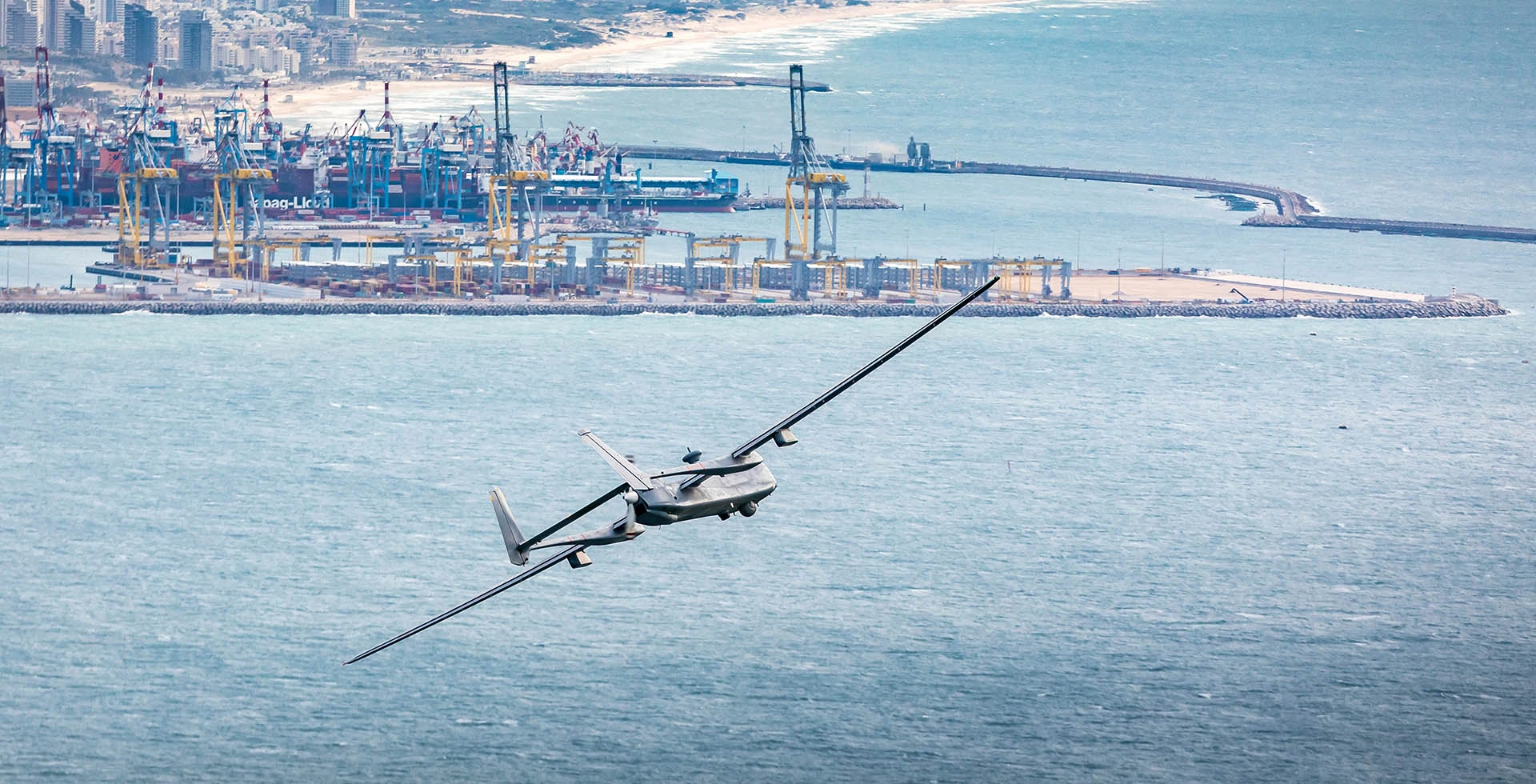
With the command center on the ground disabled under the attack, Heron operators employed their sensors and communications to help regain situational awareness at higher command levels. With onboard sensors, they collected information as quickly as possible, creating a situational picture to help the IDF command understand the situation and respond effectively. The next day, the squadron turned north to conduct surveillance against Hezbollah units in Lebanon that had struck IDF targets near Hermon Mountain. They later expanded activity in additional focus areas in Lebanon, Samaria, Judea, and throughout the region, increasing operational tempo.
The increased mission intensity was enabled by operating a force mix of tactical and heavier MALE UAS platforms equipped with various sensors. This enabled the Air Force to operate in various missions. The IAF operates the Heron family of UAS with 2 squadrons. These units are committed to strategic, tactical, and maritime surveillance missions over land and sea, operating Heron UAS (referred to by the IAF as ‘Shoval’) and Heron TP (designated ‘Eitan’). Carrying payloads for surveillance and intelligence-gathering, the Herons performed strategic, operational, and tactical missions in day and night, including in cloudy and stormy weather.
With a significantly long endurance per operational mission, Heron and Heron TP platforms currently perform 24/7 surveillance sorties, each spanning over days. Operators are replaced with fresh teams every few hours, thus maintaining high alert without leaving the target area on rotations. Regulars and reservists, men and women, share the burden; many squadron reservists are IAI employees tasked with developing, manufacturing, and operating the Heron family of UAS. Many designed the Heron unified operator station, built with extended missions in mind. These workstations provide maximum efficiency and ease of use, employing the latest user interface to reduce operator workload and maximize mission focus.
The steadfast stance of IAF Herons has demonstrated the agility and operational capability of the Heron family, which has been proven in decades of combat operations with over 50 operational users in more than 2,100,000 operational flight hours for IAI’s UAS. The 2023 Iron Swords War has now been added to the impressive legacy of IAI’s Heron family. The Heron will continue to safeguard Israel, deliver intelligence deep inside hostile areas, and reveal the enemy anywhere and anytime. “This is the time to fight with full, aggressive power! Seek and destroy the enemy,” Squadron Commander Col. F wrote in his combat address.