SHARE
SHAREHow autonomous systems, AI-driven mission management, and manned-unmanned teaming are enabling ground forces to maneuver faster, reduce risk, and succeed in high-threat urban combat environments
Col. (Res.) Amnon Ben-Yair is an expert in advanced land warfare systems, specializing in robotic and autonomous technologies for multi-dimensional maneuvering
The modern battlefield has undergone a fundamental transformation. Ground forces are increasingly required to operate in dense, saturated urban environments against asymmetric adversaries. Today, even ostensibly inferior enemy forces are equipped with sophisticated capabilities once reserved only for global superpowers, including precision-guided munitions, advanced anti-tank missiles, counter-unmanned aerial systems (C-UAS), and ubiquitous loitering munitions. This technological democratization has dramatically increased casualty rates among advancing forces, rendering traditional mission execution difficult, and at times, nearly impossible.
In this lethal reality, tactical autonomy is the key to unlocking the maneuver. Incorporating robotic and autonomous systems allows decision-makers to initiate and execute high-stakes maneuvers backed by unmanned screening and breaching elements. This architecture ensures that commanders can confidently project power, break operational deadlocks, and achieve mission success without exposing human combat troops to unacceptable, high-risk operational thresholds.
The Scenario: Unmanned Elements at the Tactical Edge
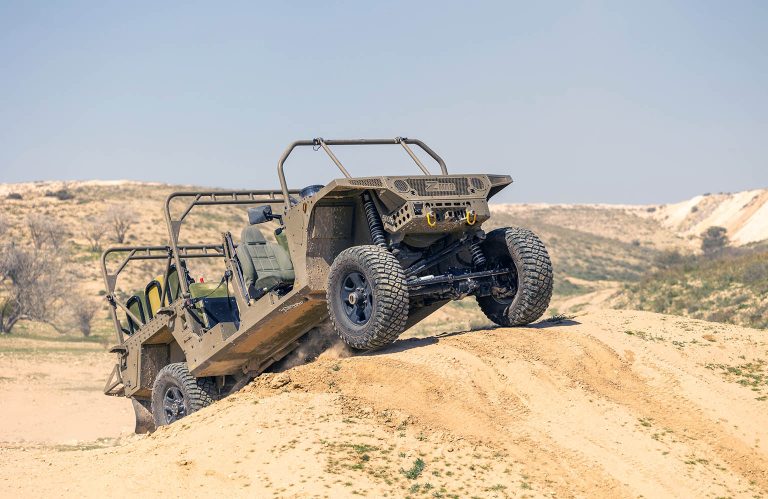
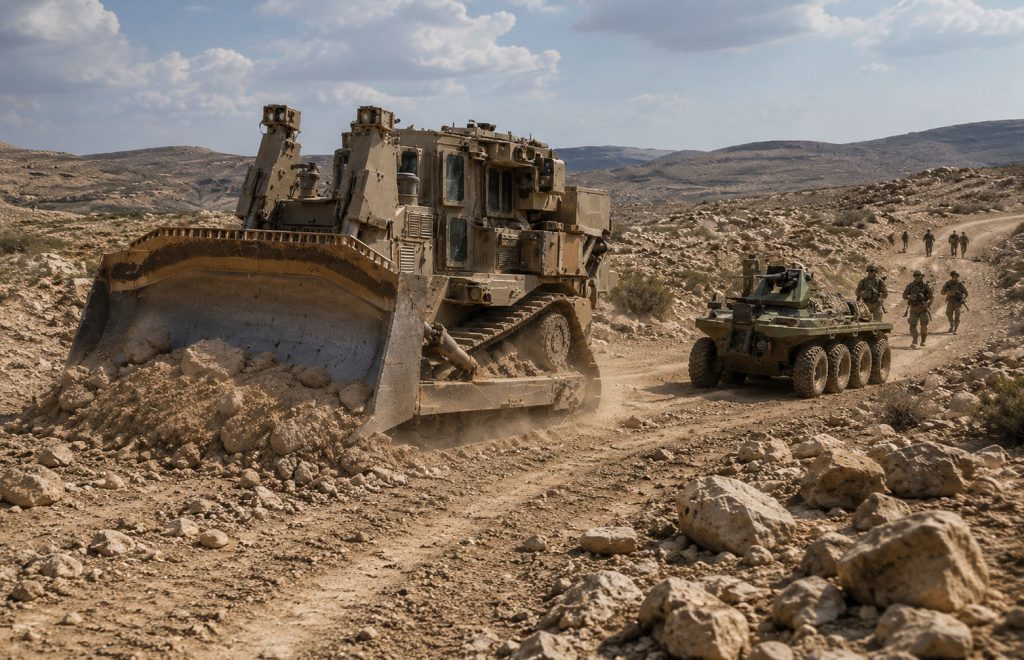
A mechanized force advances toward an urban neighborhood. It appears deserted, but intelligence reports embedded enemy activity. Ahead of the convoy, an autonomous combat engineering vehicle clears the route of abandoned vehicles and roadblocks while scanning for improvised explosive devices (IEDs). Concurrently, an unmanned tactical vehicle takes cover to monitor the flank, transmitting fused data streams to the lead force commander.
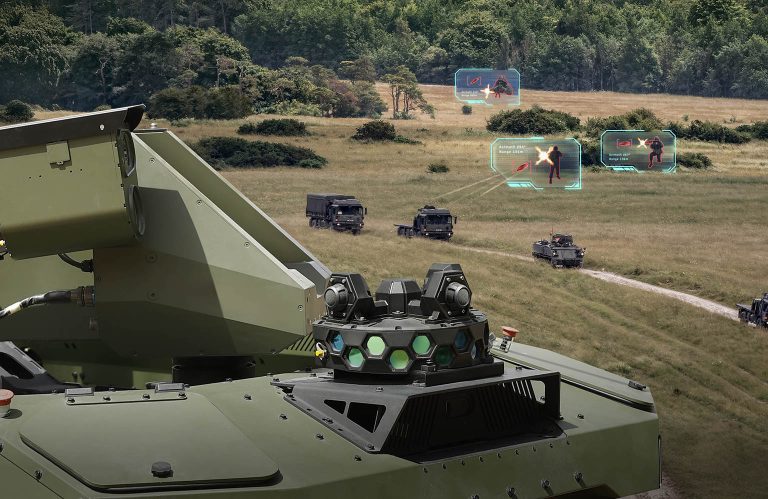
Suddenly, the convoy encounters enemy fire. Roof-mounted sensors instantly pinpoint the kinetic source, while acoustic and optical arrays identify an RPG launch signature streets away. Within seconds, the unit takes cover and coordinates fire support. While the human echelon remains protected, the autonomous vehicles autonomously advance to suppress the threat, seize dominant vantage points, and secure the perimeter.
This scenario reflects the reality of modern contested environments. Complex urban terrain, subterranean networks, and precision weapons compel militaries to rethink tactical risk management. To address these challenges, IAI is delivering advanced autonomous architectures that integrate autonomous navigation, AI-driven mission management, multi-sensor fusion, and advanced Manned-Unmanned Teaming (MUM-T).
From Remote Control to True Autonomy: Mitigating the Cognitive Burden
Military robotics is rapidly transitioning from legacy Remote Control (RC) platforms -which require a strict 1:1 operator-to-platform ratio and impose a heavy cognitive burden – toward fully integrated autonomous systems.
Modern platforms navigate complex terrain, dynamically recalculate routes, and execute mission parameters independently under human supervision. By shifting the operator’s role from “driving the platform” to “managing the mission,” these systems dramatically reduce cognitive workload, eliminate the single-operator bottleneck, and accelerate the operational tempo from safe stand-off distances.
IAI’s autonomous engineering capabilities, demonstrated by systems like the RobDozer (which converts platforms like the Caterpillar D9 into an autonomous Combat Engineering Vehicle), exemplify this shift. These conversion kits can be integrated into various bespoke platforms, enabling route-clearing, obstacle-breaching, and terrain-shaping in high-threat zones without directly exposing operators to enemy fire.
AI-Driven Mission Management in Denied Environments
Tactical autonomy depends on real-time, decentralized decision-making. IAI’s autonomous architecture utilizes AI and machine learning to analyze sensor data, monitor mission parameters, and adjust behavior on the fly.
IAI’s autonomous mission-management system, Automission, continuously evaluates terrain, threat vectors, and platform status. If a route becomes blocked or an asset is compromised, the system automatically recalculates alternative courses of action and redistributes tasks among the remaining unmanned assets.
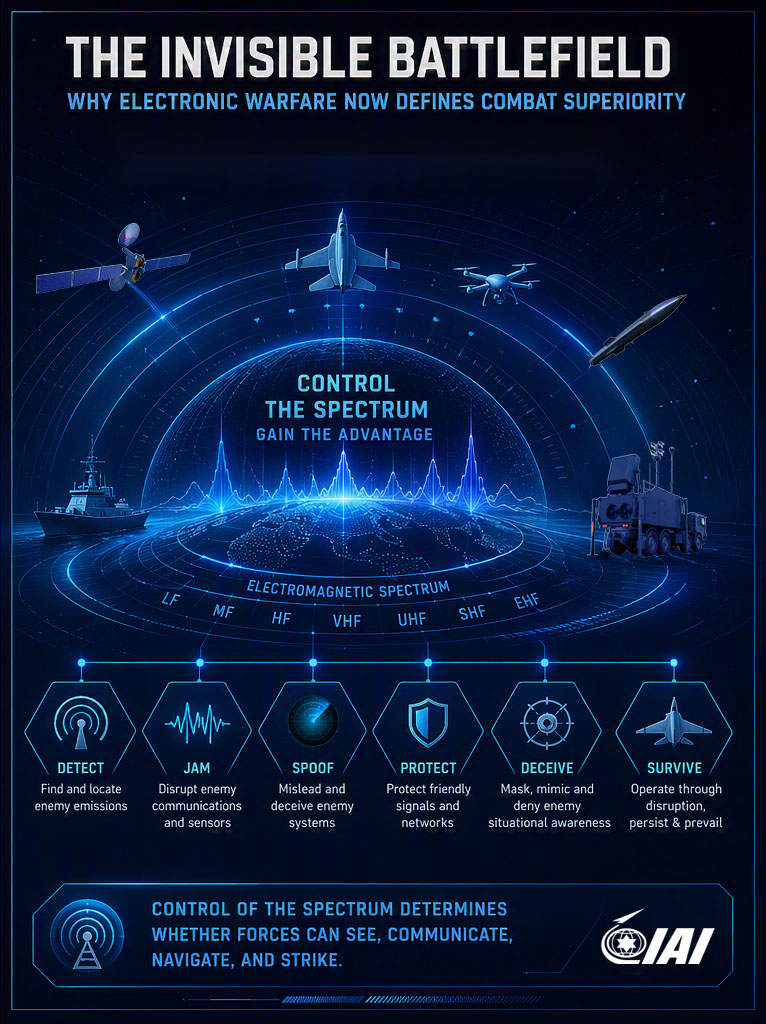
Resilience in Contested Environments: Crucially, these systems are engineered to operate in GPS-denied and communications-disrupted environments. Utilizing advanced dead-reckoning and localized edge-AI computing, IAI’s platforms continue executing their missions and adapting to tactical changes even when disconnected from the main network or subjected to heavy electronic warfare (EW).
Sensor Fusion: The Foundation of Situational Awareness
Reliable autonomy is impossible without comprehensive situational awareness. Because no single sensor can encapsulate a complex battlespace, IAI’s platforms rely on multi-sensor fusion. By synthesizing data from radar, electro-optical/infrared (EO/IR) pods, acoustic detectors, and signals intelligence (SIGINT) into a unified operational picture, the system identifies obstacles and hostile signatures in degraded visibility and rapidly changing urban environments.
This situational awareness directly supports high-risk applications, such as the RobArc system, which detects and neutralizes roadside threats and IEDs, neutralizing dangers before human boots touch the ground.
Networked Operations and Manned-Unmanned Teaming (MUM-T)
Rather than replacing the human soldier, autonomous systems act as force multipliers that extend operational reach, enhance persistence, and preserve human life. Commanders can distribute complex, high-risk tasks among multiple autonomous assets while retaining ultimate tactical authority.
Networks like IAI’s Ariel seamlessly integrate with existing battlefield management systems (BMS). This allows commanders to oversee autonomous formations, allocate tasks, and share actionable intelligence across manned and unmanned assets at both the tactical and brigade levels.
The Lethality Guardrail: While these networks support coordinated operations and automated target acquisition, IAI strictly adheres to the “Human-in-the-Loop” doctrine. The authority to deploy lethal force and execute kinetic strikes remains exclusively in the hands of human commanders.
Conclusion: Shaping the Future of Ground Warfare
The modern combat paradigm demands a shift toward sensor-driven, networked, and autonomous operations. To survive and win in dense, high-threat urban zones, military forces require architectures that extend their operational reach while systematically driving down personnel risk.
By integrating robust robotics, resilient autonomous mobility, edge-AI mission management, and secure MUM-T networks, IAI is defining the next generation of ground-combat capabilities, ensuring that when the maneuver begins, technology takes the risk, unlocks the operational potential, and ensures mission success.
Consult with an IAI Expert
Have a question or need more details?
Our specialists are here to help you find the right solution