SHARE
SHAREHow multi-sensor fusion, AI-driven processing, and rapid threat detection are helping forces understand, prioritize, and respond faster in complex urban combat environments
BG (Res.) Halutsi Rudoy is a business development and operational expert in IAI/ELTA’s Land Division, specializing in advanced battlefield situational awareness and manned–unmanned teaming, with senior command experience across IDF mechanized maneuver forces.
Modern urban warfare presents one of the most difficult operational environments for military forces. The enemy is often hidden within dense terrain, moving between buildings, alleys, underground passages, and civilian urban infrastructure. Threats emerge suddenly and simultaneously, a sniper from a rooftop, an RPG from a narrow passage, IEDs hidden in walls, or a hostile drone approaching from above. In these conditions, survival and mission success depend on one critical capability: situational awareness.
IAI has developed a new generation of tactical multi-sensor solutions designed specifically for this evolving challenge. By combining radar, electro-optical sensors, acoustic detection, passive electronic sensors, AI-based processing, and autonomous platforms, IAI enables combat forces to rapidly detect, classify, prioritize, and engage threats in real time.
The Hidden Challenge
Urban warfare constantly challenges combatants with limited visibility and fragmented information, resulting in a lack of situational awareness. Traditional sensors often operate independently and are constrained by inherent limitations. Electro-optical systems provide high-quality imagery but suffer from narrow fields of view and line-of-sight restrictions. Radar systems detect threats at longer ranges but require integration with visual systems for identification and engagement.
IAI recognized early that no single sensor can provide a complete operational picture in complex urban terrain. Effective urban combat requires multi-sensor fusion and advanced sensor management. By integrating radar, electro-optics, acoustic sensors, SIGINT, and COMINT systems, forces receive a unified operational picture that enables faster decision-making. The sensor system can correlate targets between sensors, directing an electro-optical payload toward a radar-detected target and shortening the sensor-to-shooter cycle.
StormGuard Radar: One Radar, Multiple Missions
At the center of many of IAI’s tactical sensing solutions is the ELM-2135 StormGuard radar, designed to support multiple tasks. StormGuard is a software-defined radar capable of tracking gun-launched projectiles, anti-tank missiles, RPG launches, drones, vehicles, and dismounted personnel. Its flexible architecture allows operational parameters to be rapidly updated according to mission requirements.
The radar serves as a core sensor for situational awareness, active protection, CUAS, and tactical intelligence applications. In urban combat, where reaction time is often measured in seconds, rapid detection is essential. It continuously scans the environment, enabling forces to identify threats before
they engage. In hard-kill active protection systems, radar-based detection enables a fully automated response within the extremely short reaction window.
ThunderBullet: Rapid Detection of Small Arms Gunfire Threats
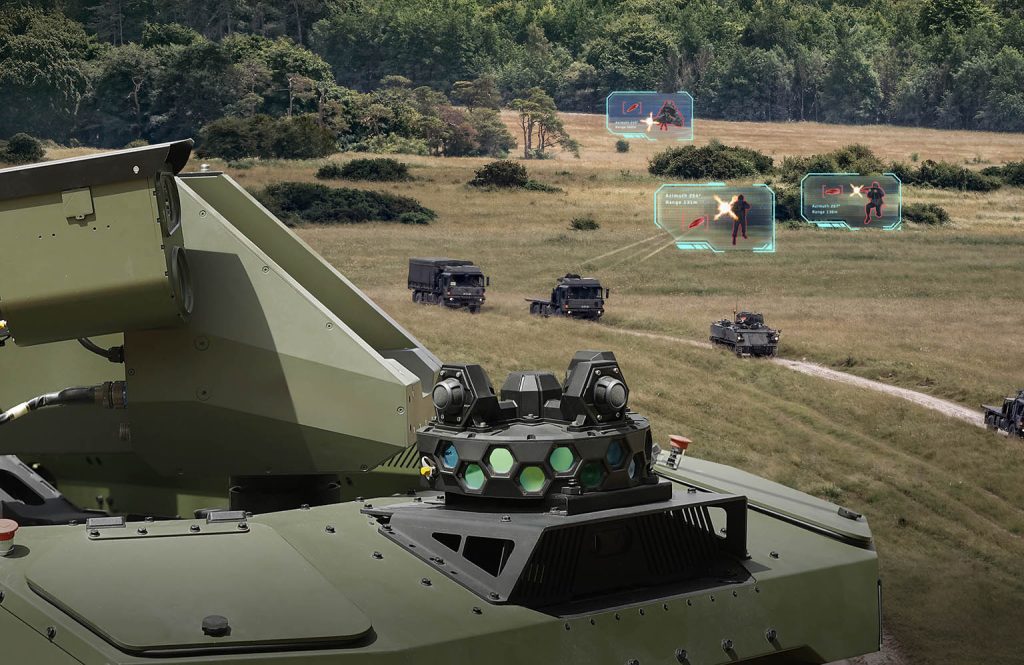
One of the systems supporting this mission is IAI’s ELO-5220P ThunderBullet tactical small arms gunfire detection system. ThunderBullet combines electro-optical and acoustic technologies to detect hostile fire sources in real time. Using patented sensing capabilities, the system identifies three shooting signatures: muzzle flash, muzzle blast, and shockwaves created during the projectile’s flight. The muzzle flash allows SWIR sensors to detect enemy azimuth, while muzzle blast waves complete the information on threat range.
The system can detect sniper fire, RPG launches, automatic fire, and other battlefield threats while alerting nearby friendly forces. When integrated with RCWS, ThunderBullet sends detection and slew-to-cue commands to the weapon system, helping close the loop between sensor, weapon, and enemy termination, improving survivability in dense urban terrain where echoes can challenge gunfire detection.
Multi-Mission Multi-Sensor suit
Complementing the radar and acoustic layers is the Multi-Mission Multi-Sensor suit M3S2 (ELI-3312), an electro-optical and radar surveillance intelligence system designed for tactical platforms. The M3S2 integrates multiple sensing technologies into a compact solution, supporting reconnaissance, target acquisition, surveillance, and force protection. It provides target tracking and identification in day, night, and degraded visibility conditions, and can be integrated across armored vehicles, unmanned systems, and robotics.
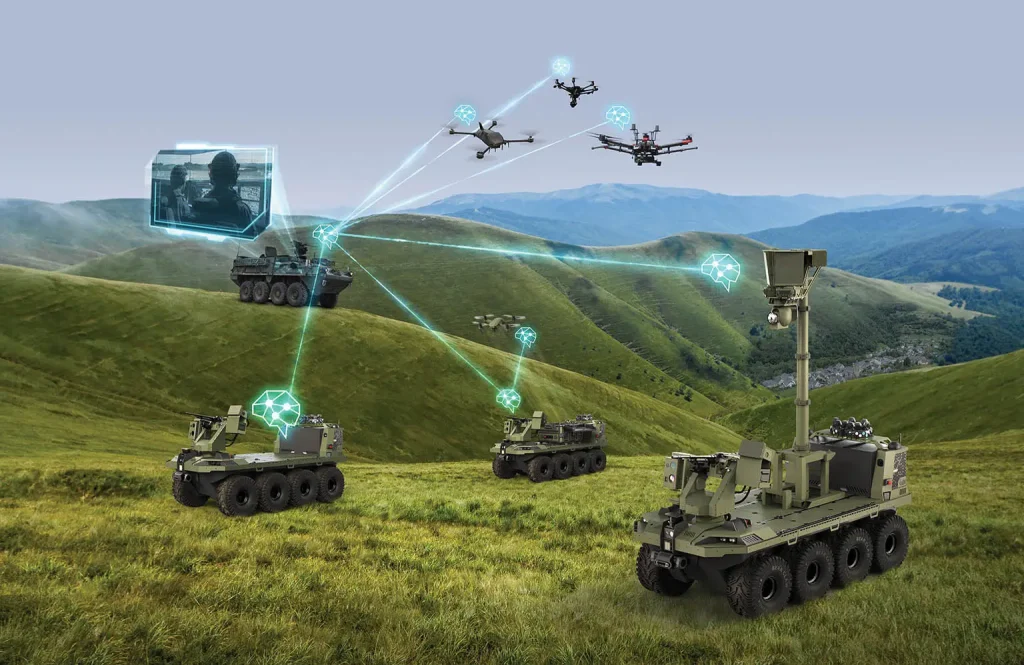
IAI is also extending these capabilities into robotics and autonomous maneuver. The REX Mk II unmanned ground vehicle demonstrates how advanced sensing technologies can support maneuvering forces while reducing soldier exposure. The platform can carry sensors, mission systems, and operational payloads into contested areas supporting reconnaissance, logistics, casualty evacuation, and tactical missions.
Augmenting the Warfighter’s Sensing
IAI’s vision is to bring multi-sensor situational awareness to warfighters in armored fighting vehicles, small tactical units, and eventually individual soldiers. The company is developing modular architectures that scale from major combat platforms down to dismounted forces and drones. At the core is a processing computer that collects, analyzes, prioritizes, and distributes sensor data across the tactical network, supporting commanders with prioritized operational tasks and response options.
From Sensor Awareness to Tactical Overmatch
In modern urban combat, information alone is not enough. The decisive advantage comes from turning fragmented sensor inputs into a clear, prioritized, and actionable operational picture – fast enough to outpace the threat.
IAI’s tactical sensor ecosystem is built for that reality. By fusing radar, electro-optics, acoustic detection, passive sensing, autonomous platforms, and AI-driven processing, IAI enables forces to detect earlier, understand faster, and respond with greater precision. This approach shortens the gap between threat detection and operational action, helping commanders and combat teams regain initiative in the most complex battlefield environments.
As threats become faster, more concealed, and more simultaneous, the future of combat will belong to forces that can sense, decide, and act as an integrated system. IAI’s multi-sensor solutions are
designed to deliver that edge – transforming situational awareness from a defensive necessity into a source of tactical overmatch.
Consult with an IAI Expert
Have a question or need more details?
Our specialists are here to help you find the right solution