SHARE
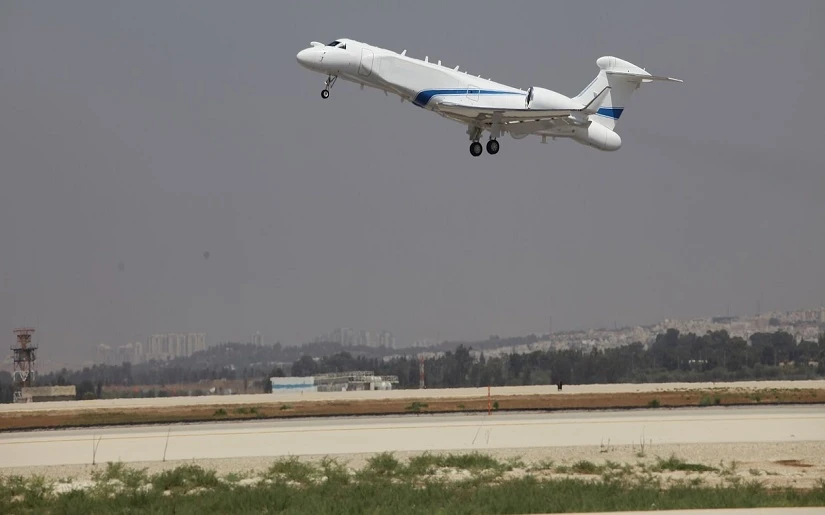
SHARENever have so many owed so much to so few,” said Winston Churchill during World War II, and this immortal phrase seems to also capture the feeling in Israel after October 7, 2023, in light of the many achievements of the defence establishment. The IDF managed to integrate advanced systems across various arenas -from Gaza and Lebanon to Tehran – providing Israel with an intelligence advantage. One system that stood out was the Oron special mission aircraft, which succeeded in gathering precise intelligence during Operation Rising Lion in Iran, providing early warnings and supporting real-time strike management.
Against this backdrop, on September 2, the Israel defence Prize will be awarded to the R&D unit at MAFAT (DDR&D – Directorate of Defence Research & Development) in the Ministry of defence, which led its development.
Oron is Israel’s newest intelligence aircraft—a remarkable result of collaboration between MAFAT, IAI (IAI-ELTA), and the IDF. The project adapted an American-built Gulfstream G-550 business jet into a highly advanced intelligence platform, equipped with radar systems, elect-optics, and SIGINT capabilities. Its operational deployment was challenging because it was completed within just a few days during wartime. Nevertheless, since then, Oron (ELI 3150 ISTAR) has consistently delivered results that provide Israel with a strategic edge in real-time monitoring and focused intelligence.
Col. B., Head of Systems at MAFAT, explained that Oron carried out numerous missions during the war, including dozens over Iran:
“The strength of this system is its versatility. During a single sortie, it can operate across multiple theaters – starting in Gaza, moving to Lebanon, and even farther away. It can handle multiple missions, provide an independent strategic intelligence picture, and support required operations. Oron is relevant to every theater.”
These theaters involve not only offensive operations but also defence. A significant improvement in Israel’s early warning system against Iranian missile and UAV attacks since April of last year is credited to Oron.
An American BizJet, Israeli Systems
This multi-theater relevance comes at a high cost. Israel is estimated to have invested around $1 billion in the aircraft. For comparison, an advanced F-35 fighter jet costs about $80 million.
“The cost of the platform and its modification makes it expensive,” says Col. B. “We work with Gulfstream aircraft, and the systems are highly unique and costly. All the technology and know-how are Israeli. The modification process was done in the U.S., but the systems are Israeli. No other country has this configuration.”
Col. B., who has served in MAFAT- the innovation leader within the defence Ministry – for over 20 years. He served in several R&D roles, in MAFAT R&D unit and the UAV Administration. Prior to the Oron, he worked on radar development and other advanced systems that contribute to Israel’s air and intelligence superiority. While he has overseen many impressive projects, Oron is unique because it quickly gained an international reputation.
The intelligence aircraft accommodates a crew of eight intelligence officers and houses dozens of computers and thousands of sensors. Oron can climb to 40,000 feet in about 25 minutes, cruise at 900 km/h, and remain airborne for about 10 hours in all weather conditions. This allows it to operate in all theaters—from Iran and Yemen to Gaza.
“This is a unique Israeli solution. We use business jet platforms, whereas most countries use larger aircraft, which makes integration easier because they have more space and power.”

Israel’s Third Special Mission Aircraft
Oron is Israel’s third special mission aircraft. The first, Shavit, has been operational since the Second Lebanon War (2006), specializing in SIGINT. The 8200 Unit, responsible for signal intelligence and code-breaking, played a major role in developing Oron, alongside the Navy. About three years after Shavit, came Eitam, which provides real-time aerial situational awareness. In the current war, Oron joined the fleet- considered one of the most advanced in the world because it combines Shavit and Eitam capabilities, as well as advanced elctro-optics and ground imaging radar. These aircraft are operated from Nevatim Airbase by Squadron 122 (Nachshon).
When asked about differences between Oron and the others, Col. B. explained:
“It’s an evolution – several generations. We’re in the fourth generation and already working on the fifth. In the third and fourth generations, we assigned single missions per aircraft – Shavit specialized in SIGINT. Eitam functions like an airborne Air Control Unit, building a strategic Aerial Situation Picture (ASP). The ASP can be generated by ground radars however if you want early warning, redundancy and Command and Control capability during remote operations, than these aircraft are the solution. Oron is the first to combine multiple domains – it’s multi-mission, integrating Navy, Air Force, and Intelligence Directorate needs.”
So what’s in the fifth generation?
“Electronic warfare capabilities —full spectrum dominance, both signal collection and Electronic Attack (EA).”
On Par with the World’s Best
Few nations can build such aircraft. One of the most famous globally is the American AWACS, based on a Boeing 707, which is far less cost-effective – always a key factor in Israeli decision-making. For Israel, the challenge is greater since Oron uses a smaller platform, making system integration more complex.
Israel recognized long ago that AWACS-style platforms weren’t suitable for its needs, so it required a different solution. This led to a unique R&D effort, leveraging IAI’s aeronautical engineering expertise and ELTA’s radar and SIGINT capabilities.
“We’re in constant dialogue with countries worldwide and know that in terms of performance, we’re at the cutting edge,” says Col. B.
Which other countries are active in the special mission aircraft domain?
“This field is mainly developed in the U.S. and Europe, while Israel is considered a powerhouse. In the U.S. and other countries, the crews are larger because they can afford it. We have unique requirements, and our miniaturization capability brings us to an optimal point. In the U.S. and Europe, they often dedicate one aircraft to one mission.”
From an operational perspective, across all arenas, Oron has a major advantage thanks to its stand-off capability. In other words, it does not need to be positioned very close to its target – whether in Iran, Lebanon, or anywhere else – to produce results. This is made possible by ELTA’s AESA radar, which enables the aircraft to cover areas spanning thousands of square kilometers, significantly enhancing its survivability. At the same time, Oron delivers broad-area coverage, which is particularly important in dense theaters such as Gaza. This allows for repeated scans and data accumulation.
The massive amount of information collected from these arenas, says Col. B., cannot be managed without advanced artificial intelligence. Some of this analysis is performed by systems onboard the aircraft itself.
According to the senior officer, operating numerous sensors exponentially increases the volume of data:
“The human operator will always make the final decision, but cognitive capacity is limited. The abundance of sensors brings intelligence richness, but if we can’t make it accessible, it won’t succeed. Without AI, we can’t fully leverage these capabilities. The data is so vast that neither the crew onboard nor the analysts on the ground can handle it alone. AI identifies points that need attention, helps interpret massive datasets, and highlights what’s relevant and what’s different. And that’s even before fusing different domains – SIGINT data, electro-optical data, and the need to integrate across domains in a way no human could do alone.”
Unmanned Systems Won’t Replace Oron Anytime Soon
Despite the rise of UAVs in Operation Rising Lion – whether reconnaissance, attack, or loitering munitions—the question arises: why not build an entire intelligence-gathering network based on drones, given their far lower cost.
“As a former head of the UAV department, I can say Oron is in a different class,” Col. B. explains. “For standoff operations, you need technology integration that’s impossible on our UAVs. We’ll see more UAV missions over time, but for the highest level, it’s not feasible.”
Satellites, another critical component of Israel’s intelligence ecosystem, also play a key role, but they cannot replace Oron:
“Satellites have time and location limitations. Oron can focus effort exactly where satellites don’t cover. In modern warfare, no single solution wins – you need a combination.”
A Strategic Asset Recognized
“The award of Israel defence Prize acknowledges years of investment that weren’t always in consensus,” concludes Col. B. “It represents technological achievement, operational necessity, and the realization of a long-term vision by the defence establishment – MAFAT, IAI & ELTA, with the IDF as the end user. Without the partnership with the Air Force with squadron 122, Intelligence Directorate, and Navy, Oron wouldn’t exist.”