SHARE
SHAREThe crew of the Israeli Navy’s missile ship INS Independence didn’t have much time to absorb the experience of their first naval strike in Yemen. No sooner had they returned to the Gulf of Eilat, and during the operation against Iran, they intercepted about 20 UAVs and inaugurated the use of the Barak Magen (The naval Barak MX) air defence system. Our correspondent joined them on deck to hear about the historic achievements that have already earned their place in the annals of the Sa’ar 6 corvette.
I board the INS Independence just days after the conclusion of Operation “Rising Lion” (the 12-day war). There, in the Gulf of Eilat, I meet the sailors responsible for two historic milestones for both the Sa’ar 6 vessel and the Israeli Navy in the past month: a strike in Yemen and the first successful UAV interception using the Barak Magen system.
The first thing that caught my attention was the atmosphere on board – from bow to stern, everyone was smiling and proud, and rightfully so.
“We’ve just returned from a historic operation, having carried out our first-ever strike in the port of Hudaydah,” says Lieutenant A., the deputy weapons officer on the INS Independence.
But this time, the missile ship’s crew faced a different mission: shifting from offense to defence. The task at hand: intercepting hostile aerial vehicles attempting to infiltrate Israeli airspace from Iran and its allies.
Tension on deck
The interception process begins in the radar control room – responsible for detecting aircraft in the ship’s aerial vicinity. A radar observer identifies suspicious targets in real time and alerts the crew.
“From that moment,” explains Lt. A., “a process begins of classifying and confirming the threat using various systems,” as much as operational security allows him to disclose.
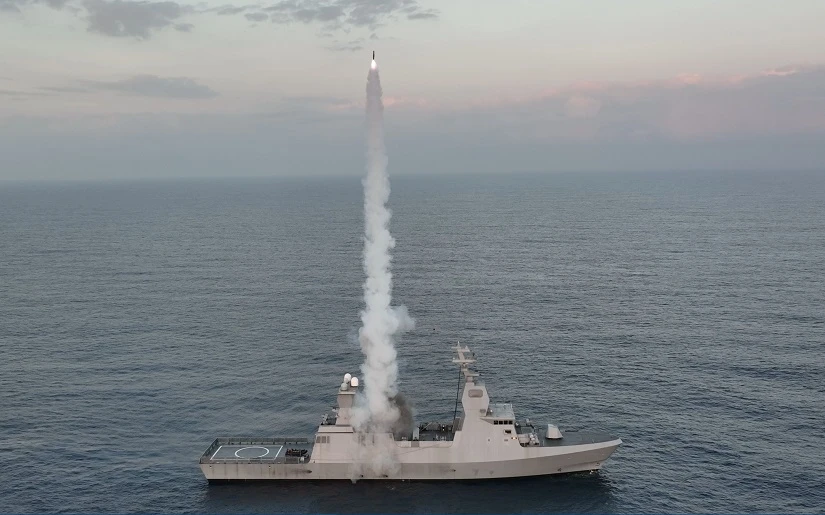
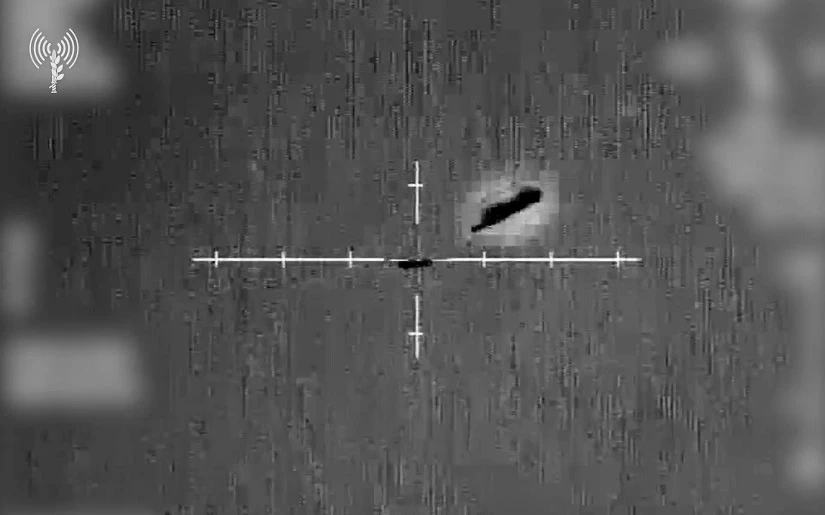
On the fourth night of the fighting, for the first time in history, an aerial threat launched from Iran was intercepted from the deck of a Sa’ar 6 vessel using the Barak Magen system and its long-range interceptor, LRAD.
Barak Magen was installed on these corvettes specifically designed to integrate advanced interception mechanisms capable of neutralizing a variety of aerial threats: UAVs, cruise missiles, guided rockets, anti-ship missiles, and more.
Speaking excitedly about their first UAV interception, Lt. A. recounts:
“When we identified the threat, there was tension on deck. Once we locked on the target, we waited for the interceptor to launch – and tracked it until it hit and downed the UAV.
We didn’t even have time to blink – boom, we spotted another one incoming.”
“A true force multiplier”
“The ship’s advanced interception capability is a true force multiplier for the Navy,” Lt. A. states. But that wasn’t the only precedent set by the Independence. The vessel went on to shoot down around 20 Iranian UAVs using the Sea-Dome system (Powered by IAI-ELTA’s radar) – the naval counterpart to the Iron Dome—including a streak of no fewer than eight UAVs intercepted in succession.
“One thing led to another,” the deputy weapons officer continues, “and we completed 12 intense days at sea, almost all of them in a constant loop of interceptions: same intensity, pace, and precision. In those moments, we truly felt the power of the missile ship – to operate in a combat zone and neutralize threats independently.”
Despite the operational strain, the full disconnect from the outside world, and the extended stay in far-from-comfortable conditions, the ship crew say the days of combat were incredibly meaningful.
“The feeling of standing on deck and actively defending Israeli civilians was amazing. We felt the need to stay alert every single moment,” says Sergeant A., one of the ship’s combat soldiers.
Another crew member, also Sergeant A., adds that the extended mission had a deep impact on the bond between crewmates:
“The long time we spent together really strengthened our cohesion. We’re a cohesive team – and that’s our advantage.”
Today, about two weeks later, Lt. A. proudly reflects on the operation:
“When I’m in the bridge (the command center of the ship), and I see our missile launch and intercept a UAV – I feel in every fiber of my being that we are part of the fight and are saving lives.”