Achieving Unparalleled Situational Awareness with Advanced Technologies
A tense silence grips the night. The airspace is alive with danger as stealth aircraft, UAVs, and unknown objects traverse the skies. Until recently, managing such a complex web of threats was a nearly insurmountable challenge for traditional air defence systems. Radars alone struggled to identify and classify objects accurately, leaving critical gaps in national security. But today, thanks to groundbreaking advancements like the Passive Air Situation Picture (PASP), nations can achieve unparalleled situational awareness with a seamless blend of active and passive technologies.
The Backbone of Air defence: What is PASP?
“An Air Situation Picture (ASP) is the cornerstone of air defence,” explains Mr. G. F., Director of Business Development and Marketing at IAI-ELTA’s Intelligence, Communications, and Electronic Warfare division. “It’s essentially a real-time map of the sky, identifying friendly, neutral, and hostile objects. ASP ensures rapid, informed decision-making to safeguard national sovereignty.”
While traditional ASP systems rely heavily on radar technology, these systems face critical vulnerabilities in modern combat scenarios. “Radars emit radiation, making them detectable and targetable by anti-radiation missiles,” Mr. F. continues. “They also struggle to classify clustered targets or detect low-flying objects, creating operational blind spots in high-stakes environments.”
A New Approach: The Strength of Passive Sensors
Passive sensors are redefining the game, providing a resilient and stealthy complement to traditional radar systems. Unlike radar, passive sensors don’t emit signals. Instead, they detect emissions from other sources, such as radar signals from aircraft. “This technology enhances detection while maintaining stealth,” says Mr. F. “Passive sensors can identify and classify targets more accurately, detect smaller objects, and remain operational even under heavy fire.”
One breakthrough solution in this domain is the Passive Coherent Location (PCL) system (ELK-7080). “PCL uses existing commercial broadcasts, like TV or mobile signals, to detect aircraft,” Mr. F. explains. “These signals reflect off airborne objects, allowing our sensors to track their movements without revealing their location. It’s an invisible system—highly effective in contested environments.”
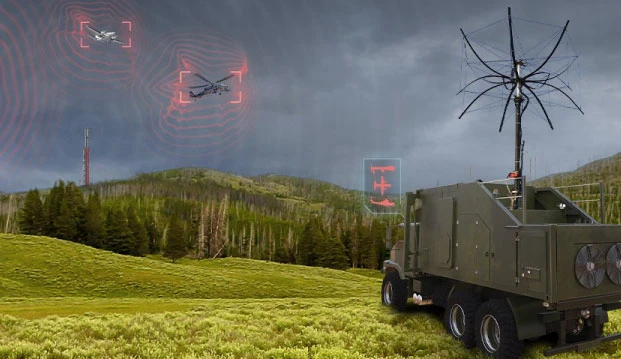
ELK-7080 PCL: Passive Coherent Location System
IAI-ELTA’s Leadership in Air defence
IAI’s ELTA division has become a global leader in integrating active and passive systems to create a comprehensive PASP (Acapella). “Our systems combine the best of both worlds,” Mr. F. states. “We integrate active radar like the MS-MMR with passive sensors, offering a robust and reliable air situation picture. These solutions are battle-tested, delivering consistent performance in real-world scenarios.”
IAI ELTA’s commitment to innovation doesn’t stop there. “Many of our engineers serve as reservists (in the IDF), operating the very systems they help develop,” notes Mr. F. “This unique dynamic ensures that our technologies are not just advanced but also field-proven and continuously refined based on real-world insights.”
Battlefield Impact: Ensuring Operational Resilience
The importance of PASP was underscored during recent conflicts, where airspace control became a critical factor in national defence. Passive sensors demonstrated exceptional reliability, operating undetected in hostile environments and providing invaluable intelligence to decision-makers. “Even under immense operational pressure, our teams deliver,” Mr. F. emphasizes. “This dedication ensures that clients worldwide receive top-tier solutions, enhancing their ability to address evolving threats.”
Enhancing defence Readiness with Passive Systems
Air defence is more than a protective measure; it’s a strategic imperative. PASP systems represent a significant leap forward in resilience and precision, offering militaries unmatched situational awareness. “Staying ahead of threats is crucial,” says Mr. F. “With PASP, nations gain the tools needed to maintain safety and strategic superiority.”
As the defence landscape grows increasingly complex, IAI’s ELTA division remains at the forefront, delivering innovations that empower nations to safeguard their skies.
By combining active and passive technologies, PASP systems set a new standard for modern air defence—a silent sentinel ensuring the safety and security of nations worldwide.