SHARE
SHAREDecentralized networking as the backbone of multi-layered air defence
Barak Israel | Product manager | With over 15 years of executive experience spanning defence aviation and enterprise software, Barak leads comprehensive business development for the networking solutions aimed at global defence aviation markets. He leverages a proven track record of managing high-value defence contracts and engaging with CxO-level stakeholders to drive international adoption of state-of-the-art aviation networking capabilities.
When hundreds of ballistic missiles, cruise missiles and unmanned aerial vehicles converge on defended airspace within minutes, no single platform or command post can process the threat volume alone. The mass aerial attacks witnessed in recent years confirmed what operational planners have long understood: effective defence against saturation strikes depends on real-time, distributed coordination across every asset in the battlespace.
A decentralized battle management cloud transforms each participating platform: fighter, interceptor, naval combatant, ground battery, airborne early warning into an intelligent node sharing fused data at millisecond latency. When one asset detects a launch, every other node receives the track instantly. Threat allocation algorithms assign the most capable shooter. Pilots see a decluttered common operating picture rather than raw feeds from multiple systems.
The operational result is compressed sensor-to-shooter timelines, seamless multi-layered engagement, long-range interceptors handling ballistic threats while short-range systems neutralize cruise missiles and drones and sustain defensive tempo without the bottlenecks of centralized voice coordination.
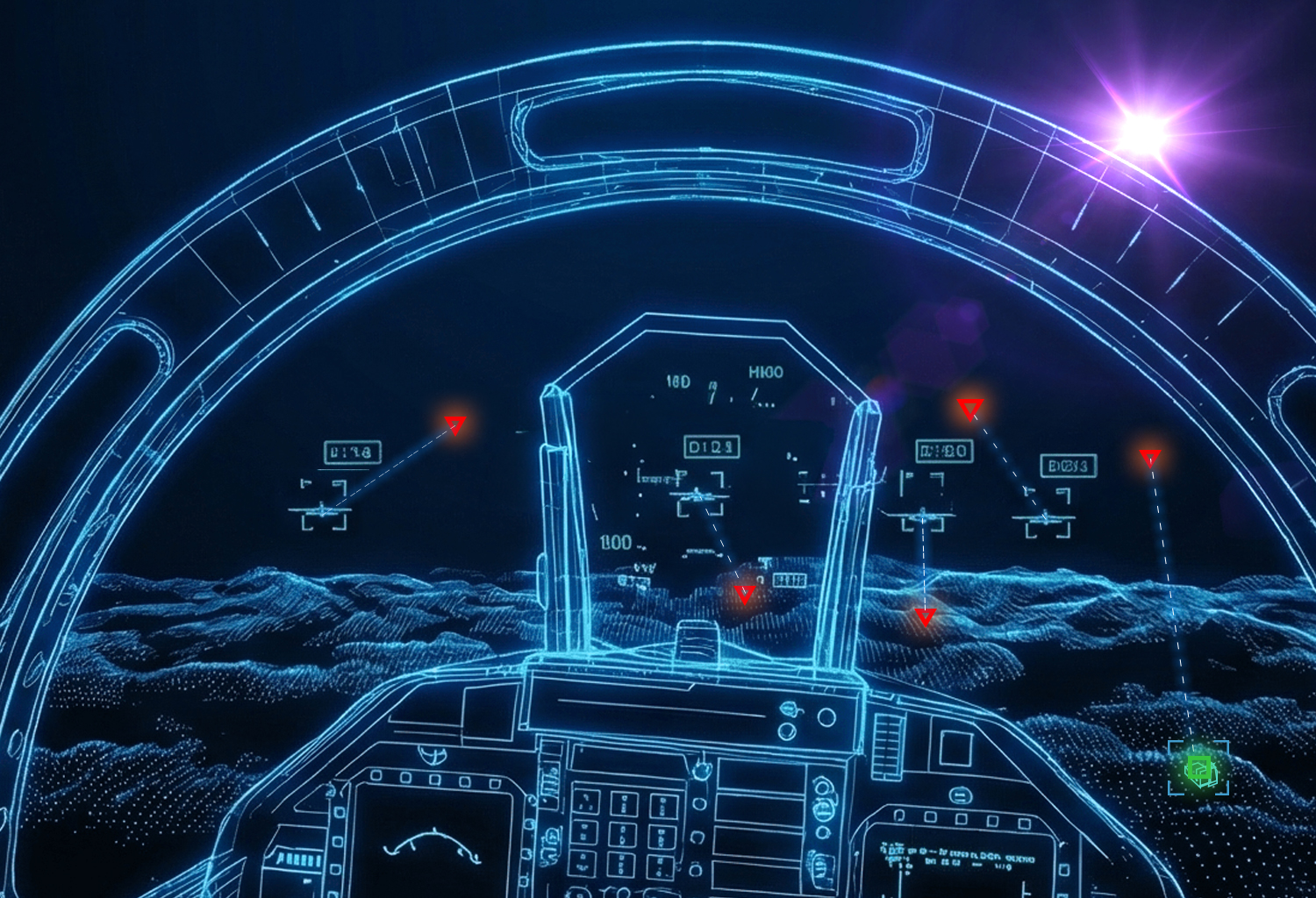
Critically, this same networking infrastructure supports offensive freedom of action. Strike packages deep in contested airspace receive updated threat data and retargeting instructions through the tactical cloud, eliminating dependence on vulnerable satellite links or manual relay.
For any nation facing the reality of massed precision strike, decentralized battle management is not an upgrade, it is the operational foundation upon which effective multi-domain defence is built. Radio-agnostic, platform-agnostic, and scalable from a single squadron to an entire joint force, it integrates with existing data links while dramatically enhancing their effectiveness.
Explore more IAI insights
Consult with an IAI Expert
Have a question or need more details?
Our specialists are here to help you find the right solution